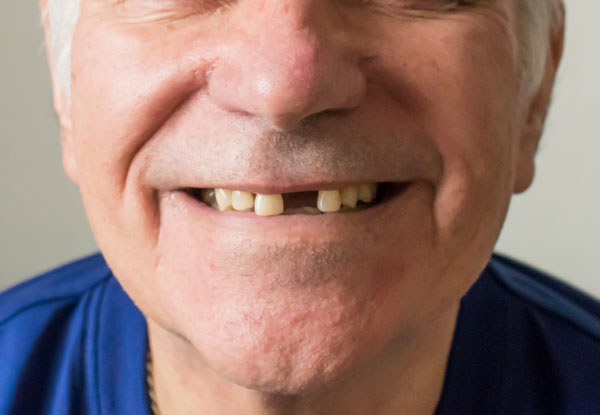
Simply put, any person who has had the misfortune to lose one or more teeth, or even a part of the jaw bone, is a candidate for dental implants. This includes those individuals who have congenitally missing teeth (i.e., some or all or their teeth have been missing since birth). As an aside, if you fall into any of these categories you are not alone as it has been estimated that approximately 125 million Americans are missing one or more teeth for one reason or another!
Once we have established the absence of one or more teeth, as the basic criteria for placing dental implants, we must consider two additional factors that may ultimately affect the outcome of treatment.
First, patients need to be in a good state of health, and we would expect that any systemic illnesses or condition that may adversely affect healing is well under control. The diabetic patient, as an example, may be an acceptable candidate for dental implants provided that their disease process has been addressed, and they are carefully monitoring their medications and level of blood sugar. If not and the patient is unstable, then we would need to work with the patient’s physician to correct the situation prior to proceeding with treatment. Any concerns that you may have regarding your medical history should be discussed with your doctor at a consultation appointment.
Second, the patient must have enough high quality bone within which the implant(s) can be placed. Whenever a tooth is lost, bone in the surrounding area begins to remodel and slowly disappears. This physiological process is called resorption. Consequently, patients who have been missing teeth for a period of time may also present with resorption of the jaw bones. If the degree of resorption is slight then it is usually possible to place dental implants without any further treatment. However, if the resorption process is extensive there may be insufficient bone available to support the implant.
In the not too distant past patients who presented with insufficient bone were simply classified as non-candidates, and were left untreated. Fortunately we are now able to transform the majority of non-candidate patients, with deficient bony support in either the upper or lower jaw, into good candidates for dental implants with the use of a variety of simple grafting procedures. Often the grafting can be done in conjunction with the placement of implants in a single surgical procedure. This minimizes patient inconvenience and decreases the treatment time.
Some patients present with more significant bone loss and may require more extensive grafting procedures that need to be accomplished prior to the placement of implants. In any case, it is important to remember that almost any patient can receive dental implants as long as they are committed to treatment. Again, your doctor should discuss the necessity of any grafting procedures at the consultation appointment.